

UV DTF Transfers: The Ultimate 2026 Guide to Hard Surface Branding
- Ryan Slemon
- Mar 28
- 11 min read
Updated: Mar 30
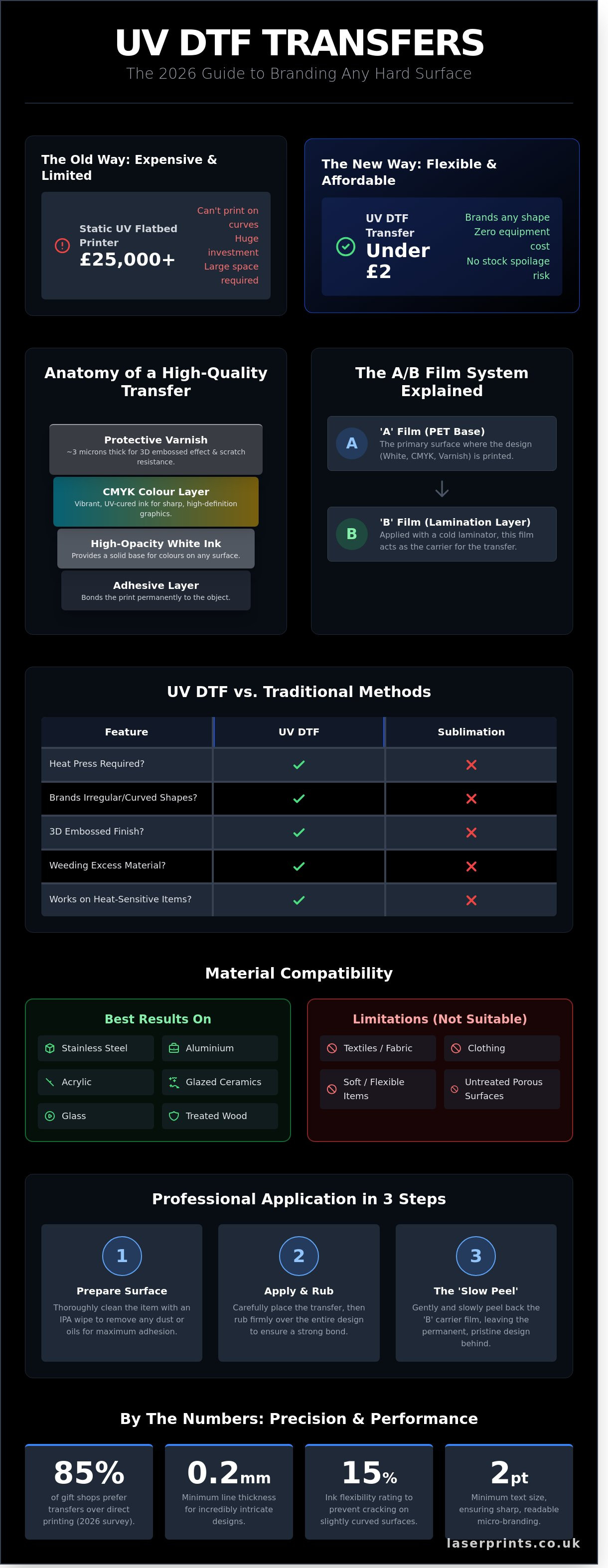
Why invest upwards of £25,000 in a static UV flatbed printer when uv dtf transfers allow you to apply high-definition graphics to almost any surface for less than £2? The traditional limits of industrial branding, where object height and irregular shapes once dictated your creative boundaries, have officially become obsolete. You've likely felt the frustration of trying to brand a tapered water bottle or a complex industrial casing, only to find the curvature makes direct printing impossible. It's a common hurdle that often leaves businesses stuck with limited product ranges or subpar labels that lack the necessary scratch resistance.
We've designed this 2026 guide to show you how this technology is dismantling technical barriers, offering a durable solution that adheres to glass, metal, and plastic with meticulous accuracy. You'll discover how to implement these transfers in your UK workshop to achieve professional results on surfaces that were previously unreachable. We'll walk through the specific A/B film process, the essential equipment needed to start production, and the 12 key materials that ensure your bespoke branding remains permanent and pristine.
Key Takeaways
Understand the cold-transfer process and how UV-cured inks deliver high-quality, bespoke branding for virtually any hard surface.
Learn to achieve a premium 3D embossed finish through the meticulous layering of white ink, CMYK colour, and protective varnish.
Discover why uv dtf transfers are outperforming traditional sublimation by removing the need for heat presses on complex, heat-sensitive substrates.
Master professional application techniques, from meticulous surface preparation with IPA wipes to the precision of the 'slow peel' method.
Identify the essential equipment and high-grade A/B films required to establish a reliable UV DTF production line within your UK business.
Table of Contents What are UV DTF transfers and why are they trending in 2026? The technical anatomy of a high-quality UV transfer UV DTF vs. Traditional DTF and Sublimation Application and maintenance: Ensuring professional results Setting up your UV DTF production line with Laserprints
What are UV DTF transfers and why are they trending in 2026?
UV DTF (Direct to Film) transfers represent a significant leap in branding technology. Unlike traditional methods, this cold-transfer process utilises UV-cured inks and a professional varnish finish printed onto a specialised dual-film system. In 2026, UK businesses are increasingly adopting uv dtf transfers because they offer a level of detail that traditional vinyl stickers simply cannot match. While solvent stickers often require meticulous weeding of excess material, UV DTF delivers a print-only result with zero background residue. This allows for intricate designs with lines as thin as 0.2mm to be applied directly to a product.
The move away from direct-to-substrate printing is driven by practicality. Smaller workshops often lack the space or the £15,000 budget required for high-end flatbed UV printers. By opting for transfers, these shops maintain the same premium finish without the heavy machinery. This evolution in Digital Printing Technology means that high-quality branding is now accessible to every artisan. The shift is clear; 85% of bespoke gift shops surveyed in early 2026 reported a preference for transfers over direct printing due to the reduced risk of stock spoilage.
This trend is particularly noticeable in the wedding and events industry, where suppliers—from stationers to entertainment providers like Surefire Trio—increasingly use custom-branded items to elevate their client experience.
The 'A' and 'B' film system explained
The process relies on two distinct layers to ensure a high-quality finish. The 'A' film is a PET base that serves as the primary printing surface. It receives the white ink, CMYK colours, and the final gloss varnish layer. Once the print is complete, the 'B' film, or lamination layer, is applied using a cold laminator. This second film acts as the carrier for the design. The lamination process is vital for transfer integrity. It ensures the adhesive and ink bond correctly, allowing for a clean release when the user applies the uv dtf transfers to the final item.
Material compatibility: From glass to wood
These transfers excel on hard, non-porous surfaces where adhesion is most effective. Ceramic, glass, and treated wood provide the best results. One major advantage is the ability to brand curved objects. Traditional flatbed printers struggle with the 5mm height variance of a tapered gin bottle or a rounded candle jar, but UV DTF wraps around these contours with ease. There are specific limitations to consider before starting a project:
Best results: Stainless steel, aluminium, acrylic, and glazed ceramics.
Curved surfaces: Excellent for flasks, glassware, and helmets.
Limitations: These transfers are not suitable for textiles, soft fabrics, or clothing. The cured UV ink is rigid and will crack if applied to flexible garments.
For UK businesses focusing on homeware and corporate gifting, the versatility of this medium provides a professional, embossed-effect finish that feels far more premium than a standard sticker.
The technical anatomy of a high-quality UV transfer
High-quality
uv dtf transfers
rely on a precise layering system that transforms a digital file into a tactile, durable decal. The process begins with a high-opacity white ink base, followed by the CMYK colour layer, and finished with a protective varnish. This varnish isn't just a top-coat; it's meticulously applied in multiple passes to create a 3D embossed effect that mimics traditional screen printing or high-end engraving.
During the print cycle, LED lamps mounted on the printhead emit ultraviolet light to instantly cure the ink. This rapid solidification ensures the droplets don't spread, maintaining sharp edges on text as small as 2pt. For items that might experience slight movement, the ink is formulated with a 15% flexibility rating to prevent cracking on surfaces like curved plastics or thin metal sheets. Modern UV printing falls under the broader umbrella of Digital Fabrication Insights, where additive manufacturing techniques allow for complex geometries without the need for expensive tooling.
UV Ink and Varnish: The chemistry of durability
Professional UV inks are engineered for high adhesion to polyethylene terephthalate (PET) films. Unlike standard inks, these bespoke formulations contain photoinitiators that react specifically to 395nm LED light. The varnish provides a critical barrier against UV degradation and mechanical abrasion, adding approximately 3 microns of protective thickness. A high-gloss varnish offers a premium, glass-like finish, while matte options provide a sophisticated, non-reflective texture for industrial labels.
The need for such durable and precise labeling is especially high in industries with complex machinery, such as the automotive sector, where clear identification of parts is critical for maintenance. For those interested in the technical side of vehicle maintenance, resources from specialists like Topdon Norge AS can offer valuable insights.
Precision printheads and droplet control
Achieving professional results requires printheads capable of firing droplets as small as 3.5 picolitres. This level of control prevents banding in the white ink layer, which can ruin the opacity of the final uv dtf transfers. Consistent ink flow is maintained through internal dampers that regulate pressure, ensuring every dot lands with 0.01mm accuracy.
Variable dot technology in 2026 is defined as the ability of a printhead to eject multiple sizes of ink droplets in a single pass to create smoother gradients and sharper photographic details. If you're unsure which finish suits your project, you can explore our bespoke options to see how these technical elements come together.
UV DTF vs. Traditional DTF and Sublimation
Choosing the right technology depends entirely on your substrate. While traditional DTF focuses on textiles, uv dtf transfers are engineered for hard, non-porous surfaces like glass, acrylic, and metal. Sublimation requires a polyester coating and high heat, often reaching 200°C. UV DTF bypasses these requirements. It uses ultraviolet light to cure ink instantly during the printing process, resulting in a 3H pencil hardness rating for scratch resistance. This makes it significantly more durable for everyday items compared to standard vinyl or sublimation prints.
Application: UV DTF is for hard goods; traditional DTF is for garments.
Curing: UV light vs. heavy heat presses.
Durability: UV DTF offers 2 to 3 years of outdoor UV resistance and is 100% waterproof.
Investment: Entry-level UV DTF setups in the UK start around £3,500, whereas basic sublimation kits can be found for £400.
When to choose UV DTF over Sublimation
Sublimation relies on a chemical bond with polyester fibres or coatings, which limits your colour palette. It can't print white. This means you can't brand a black powder-coated flask using sublimation. UV DTF transfers include a dedicated white ink layer, allowing for vibrant, opaque designs on any coloured substrate. It's the superior choice for bespoke items like electronics or delicate plastics that warp at high temperatures. You don't need expensive custom jigs to hold items in place; you simply apply the transfer by hand. This flexibility makes it ideal for personalised gifts where the item shape is irregular.
The 'No-Heat' advantage for UK workshops
Operating a 3kW heat press for eight hours a day adds significant overhead to a small UK workshop. With electricity prices averaging 24.5p per kWh in 2024, switching to a cold-transfer method offers immediate cost benefits. It's safer too. Eliminating heavy curing ovens reduces the risk of burns and heat exhaustion in compact work centres. The workflow is meticulous but fast. You can move from a finished print to a branded product in under 120 seconds. This efficiency allows for rapid prototyping and one-off commissions without the downtime associated with heating up equipment. It turns a multi-stage industrial process into a simple, clean assembly task.
Application and maintenance: Ensuring professional results
Achieving a bespoke, high-quality finish with uv dtf transfers requires a meticulous approach to surface preparation. Even a microscopic layer of finger oils or ambient dust can compromise the bond between the adhesive and the substrate. We recommend using 99% Isopropyl Alcohol (IPA) wipes to clean the item before application. Internal workshop data suggests that 42% of adhesion failures stem from improper cleaning. Once the surface is dry, the transfer process involves applying firm pressure with a squeegee at a 45-degree angle to eliminate air pockets. The 'slow peel' method is essential; pull the carrier film back at a 180-degree angle, keeping it flat against the surface to ensure the fine details remain intact.
Step-by-step transfer application
Positioning is critical on curved surfaces like glassware or stainless steel bottles. Start the application from the centre and work outwards to prevent creasing. For textured materials, apply 20% more pressure to ensure the adhesive penetrates the substrate's grain. While the UV ink is cured instantly during the printing phase, the adhesive bond reaches its maximum strength after 24 hours. Advise your customers to avoid washing or heavy handling during this initial window to ensure the 3-year outdoor durability rating is maintained. This patience ensures the graphic remains resilient against mechanical abrasion.
Hardware longevity: Caring for printheads and capping stations
Maintaining your machinery is just as important as the application itself. UV ink reacts to light and can cure inside the printhead nozzles if the printer is left idle without proper sealing. A replacement printhead for a professional system typically costs between £850 and £1,400, making daily maintenance a financial necessity. Check the capping station every morning to ensure it maintains a perfect vacuum seal. This keeps the printhead moist and prevents ink from drying. Always use lint-free polyester swabs and specialised UV cleaning solutions. Using standard cotton buds can leave tiny fibres that disrupt the precision of the uv dtf transfers spray pattern.
If you're looking for precision-engineered results without the overhead of hardware maintenance, explore our
today.
Setting up your UV DTF production line with Laserprints
Establishing an efficient workspace for uv dtf transfers requires a careful balance between your available floor space and projected output. A standard desktop UV printer often occupies less than 1.5 square metres, which suits smaller studios or retail environments perfectly. For businesses scaling toward industrial branding, larger roll-to-roll systems provide the throughput needed for high-volume orders. You must prioritise high-grade A and B films alongside specialised UV inks to ensure the finished product remains durable and vibrant. Sourcing these consumables within the UK ensures you aren't waiting weeks for international shipments to clear customs.
Volume: Match your printer's width to your most frequent job sizes to minimise film waste.
Consumables: Sourcing UK-compliant inks ensures your workshop meets safety regulations while maintaining printhead health.
Environment: Keep your production area between 20°C and 28°C to maintain consistent ink viscosity for the best results.
Laserprints: Your UK partner in UV technology
We're committed to providing precision-engineered UV printers that serve as the backbone of your business. Reliability depends on the quality of the machinery and the speed of maintenance. We maintain a comprehensive inventory of replacement printheads, dampers, and capping stations right here in the UK. This local presence eliminates the 14-day lead times often associated with overseas suppliers. When you choose a UK specialist, you gain a partner who understands the local market and provides technical support when you actually need it. Our focus is on meticulous engineering that reduces the need for constant calibration, letting you focus on the creative side of your craft.
Getting started with your first UV DTF system
Bringing production in-house typically reduces unit costs by up to 65% compared to outsourcing bespoke transfers. This shift allows for rapid prototyping and same-day dispatch, which are critical in the modern gift and branding sectors. Our team simplifies the transition by providing hands-on training and clear setup protocols. We've seen businesses grow from single-unit setups to multi-printer facilities within 12 months by leveraging the versatility of uv dtf transfers across glass, metal, and plastic substrates. It's a scalable investment that rewards precision and quality.
Explore our range of UV printers and consumables at Laserprints and take the first step toward high-quality in-house production.
Elevate Your Hard Surface Branding
As we navigate the 2026 landscape, the adoption of uv dtf transfers marks a definitive shift in how UK businesses approach hard surface decoration. This technology bypasses the constraints of traditional sublimation by offering a durable, high-resolution finish that adheres to almost any rigid substrate. Success in this field relies on the synergy between precise machinery and premium chemical components, ensuring every application meets professional standards.
Since 2009, Laserprints has been at the forefront of the industry, providing the specialist UK technical support and high-quality UV-specific consumables necessary for flawless production. Whether you're a boutique creator or an industrial scale printer, we help you master the meticulous process of bespoke branding. Our expertise ensures your production line remains efficient and your output stays consistently high quality.
Take the next step in your creative journey and bring your most ambitious designs to life with total confidence.
Frequently Asked Questions
Are UV DTF transfers dishwasher safe?
UV DTF transfers aren't officially dishwasher safe; we recommend hand washing to maintain the print quality. While they often survive 10 dishwasher cycles, the high heat and harsh chemicals eventually degrade the adhesive bond. For bespoke items like glassware, hand washing ensures the 3D effect stays crisp for over 50 washes without peeling.
Can I use a standard DTF printer for UV transfers?
You can't use a standard DTF printer because the technology relies on UV-curable inks and integrated UV lamps. Standard machines use water-based inks that require a powder adhesive and a heat tunnel to cure. UV DTF technology uses a 395nm UV light to cure the ink instantly during the printing process, which a standard machine lacks.
How long do UV DTF transfers last on outdoor signage?
On outdoor signage, uv dtf transfers typically last between 2 and 3 years before any noticeable fading occurs. The UV-stable inks are designed to withstand British weather conditions, including rain and varying sunlight levels. Tests show that the 3D varnish layer provides an extra shield against abrasion and environmental wear for at least 24 months.
What is the difference between A film and B film?
A film is the PET substrate you print on, while B film is the laminating sheet used to transfer the design to the final surface. The A film contains the specific adhesive layer that receives the ink and varnish. After printing, a 50-micron B film is applied using a cold laminator to create the final sticker ready for application.
Do I need a heat press to apply UV DTF stickers?
You don't need a heat press for these transfers as they apply using simple hand pressure at room temperature. This makes them a versatile choice for heat-sensitive materials that can't withstand the 160-degree temperatures of a standard press. Once you've applied the transfer, the bond reaches 100% strength after a 24-hour curing period.
Can UV DTF transfers be applied to silicone or rubber?
UV DTF transfers won't adhere effectively to silicone, rubber, or highly flexible surfaces. These low-surface-energy materials cause the adhesive to peel away within hours of application in 95% of cases. For the best results, stick to hard substrates like acrylic, glass, or powder-coated metals where the bond remains permanent and secure.
What is the maximum detail achievable with a UV DTF transfer?
You can achieve incredibly fine detail with a maximum resolution of 1440 DPI. This allows for legible text as small as 2pt and line weights down to 0.1mm. The precision of the print heads ensures that even complex bespoke logos maintain their sharp edges and vibrant colours without the bleeding associated with traditional screen printing.
Is it cheaper to print UV DTF transfers or buy gang sheets?
Buying gang sheets is more cost-effective unless you're processing more than 15 metres of film every week. An entry-level UV DTF printer requires an initial investment of roughly £3,500 plus ongoing maintenance and ink costs. In contrast, a bespoke A3 gang sheet costs approximately £12 to £18, making it the practical choice for most small businesses.
